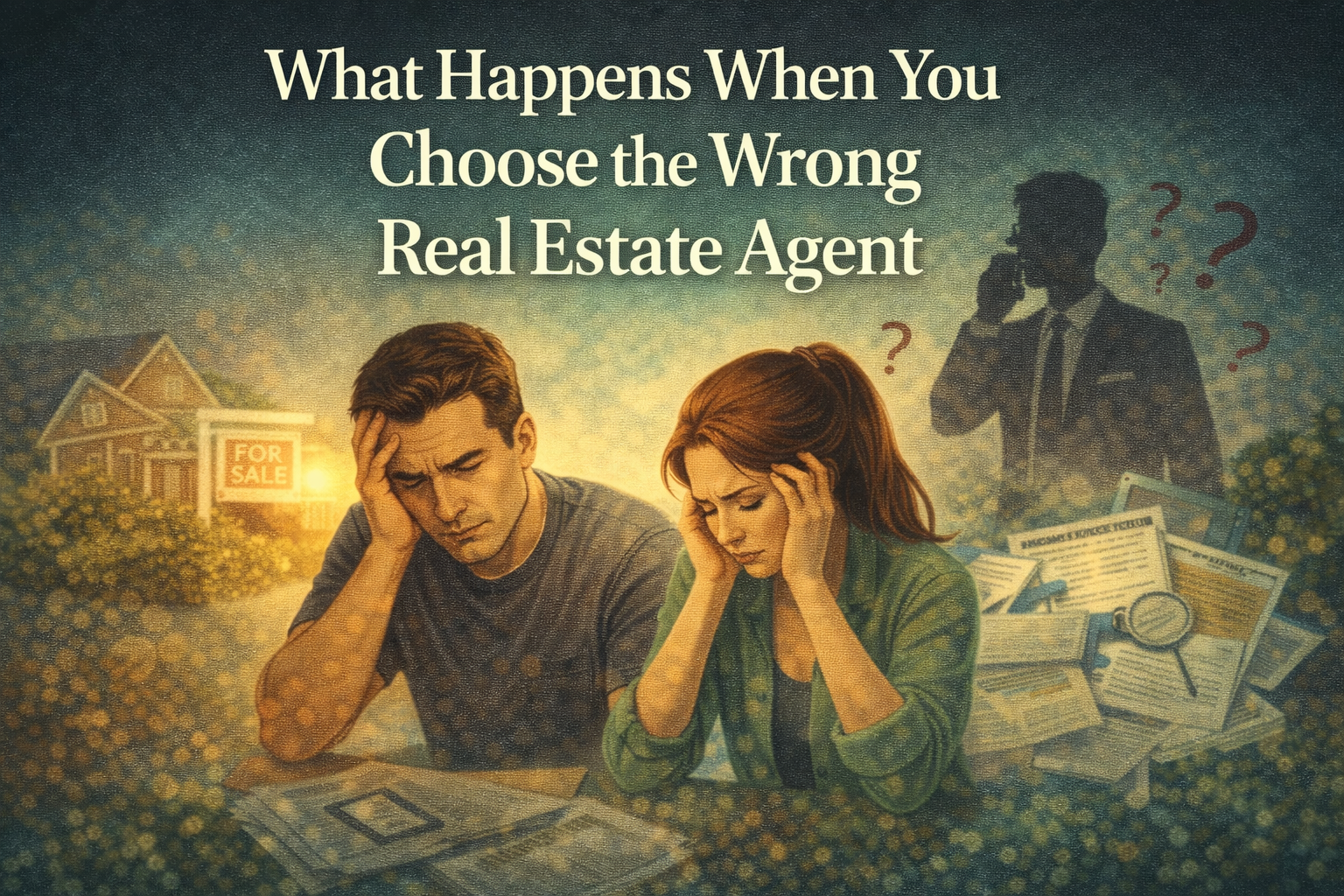
What Happens When You Choose the Wrong Real Estate Agent
Buying or selling a home is one of the largest financial transactions most people will ever make. Because of this, the real estate professional guiding the process can play a significant role in how smoothly the experience unfolds.
While many transactions go well, there are situations where buyers or sellers later feel that the agent they chose wasn't the best fit for their situation.
Sometimes this happens because expectations weren't clearly defined in advance. Other times it may involve differences in communication style, negotiation strategy, or local market experience.
Understanding some of the common challenges that occur when the wrong agent is chosen can help buyers and sellers make more informed decisions before entering into a working relationship.
Communication Breakdowns
One of the most common frustrations reported by buyers and sellers is poor communication.
Real estate transactions often involve deadlines, negotiations, and rapidly changing circumstances. When communication is inconsistent or unclear, clients may feel uncertain about what is happening throughout the process.
Examples of communication issues may include:
- Delayed responses to questions
- Unclear explanations of next steps
- Lack of updates during negotiations
- Missed deadlines or timelines
A strong working relationship between a client and agent often depends heavily on clear and consistent communication.
Pricing Strategy Mistakes
For sellers, pricing strategy can have a significant impact on how a property performs in the market.
Listing a home too high may reduce early interest from buyers, while pricing too low could potentially leave money on the table.
Experienced agents often analyze multiple factors when recommending pricing strategies, including:
- Recent comparable sales
- Current buyer demand
- Local market trends
- Property condition and location
When pricing strategy isn't aligned with market conditions, sellers may experience longer listing times or unexpected price adjustments.
Weak Negotiation Representation
Negotiation is another area where experience and strategy can play an important role.
Purchase offers often involve multiple components beyond price, such as:
- Inspection requests
- Closing timelines
- Contingencies
- Repair negotiations
An agent's ability to guide negotiations can influence how these discussions unfold and whether agreements are reached efficiently. Some agents pursue additional negotiation training or certifications to strengthen their skills in this area.
Lack of Local Market Knowledge
Real estate markets can vary significantly between neighborhoods — even within the same city.
Agents who work regularly in specific areas often develop insights into:
- Neighborhood pricing patterns
- Buyer demand
- Upcoming development
- Property value trends
Without strong local market knowledge, it can sometimes be more difficult to accurately position a property or evaluate an offer.
Misaligned Expectations
Sometimes the biggest issue isn't skill level but fit.
Different agents often work in different ways. Some prefer a fast-paced approach with quick decisions, while others take a more methodical and analytical approach.
Similarly, some clients want frequent updates and detailed explanations, while others prefer minimal communication unless important decisions arise.
If expectations around communication, availability, or strategy aren't aligned early in the process, the experience may feel frustrating for both parties.
Why Many Buyers and Sellers Compare Multiple Agents
Because of these potential differences, many buyers and sellers choose to speak with one or two agents before deciding who to work with.
Meeting with multiple professionals can help clients:
- Compare communication styles
- Understand different strategies
- Evaluate experience levels
- Determine who they feel most comfortable working with
This comparison often makes it easier to move forward with confidence. If you're still early in the process, it may be helpful to review how to choose the right real estate agent for your situation.
Understanding What Matters Most Before Choosing an Agent
Before selecting an agent, many buyers and sellers find it helpful to think about the qualities they value most in the professional guiding their transaction.
Some of the most common considerations include:
- Communication preferences
- Negotiation experience
- Local market knowledge
- Familiarity with specific types of transactions
- Professional certifications or specialized training
If you're curious about what some of those certifications mean, you may find it helpful to review real estate agent certifications and designations explained.
A Thoughtful Approach Can Make the Process Smoother
Real estate transactions involve many moving parts, and the professional guiding the process often plays a key role in helping everything stay organized and on track.
Taking a little time upfront to evaluate potential agents, ask questions, and identify what qualities matter most can help ensure the working relationship is a strong fit.
When expectations are aligned and the right expertise is involved, the buying or selling process often becomes much easier to navigate.